Every homeowner in Graham, Lakewood, Port Orchard, Gig Harbor, Steilacoom, Tacoma, and Bonney Lake, WA has watched a hard rain turn a well-kept yard into standing water, muddy trenches, and eroding beds. It’s frustrating, but luckily it’s also preventable. The difference between a yard that handles Puget Sound winters gracefully and one that floods every November usually comes down to one decision made before the first shovel hits the ground: what material goes beneath the surface.
Randles Sand & Gravel has been supplying South Puget Sound homeowners with the right materials for that decision since 1987. Our inventory of yard and foundation drainage gravel, French drain gravel, and sand is built specifically for the soil conditions, rainfall volumes, and site types common to this region.
Why Drainage Matters More Than You Think
Water that has nowhere to go doesn’t disappear — it finds the path of least resistance, and that path is often directly toward your foundation, through your topsoil, or into your plant root zones. Poor landscape drainage solutions don’t just create cosmetic problems. They create structural ones.
1. Foundation damage:
Water pooling against a foundation will eventually migrate into crawl spaces and basements, compromising structural integrity over time — often invisibly until the damage is significant.
2. Soil erosion:
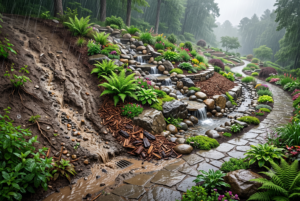
Without adequate surface protection, heavy rain strips topsoil from slopes and garden beds, displacing years of soil conditioning in a single storm event.
3. Plant health decline:
Saturated soil deprives root systems of oxygen. Root rot and anaerobic soil conditions follow quickly in areas where water cannot drain adequately.
4. Compounding repair costs:
Correcting drainage failures after the fact, regrading, waterproofing, replacing dead landscaping. Consistently costs more than installing the right materials from the beginning.
Even the experts suggest that: Investing in proper drainage materials upfront costs a fraction of what remediation costs after water has already found its way into your foundation or stripped your yard bare.
Quick Facts: How Proper Drainage Protects Your Home
| Metric | Statistic | Source |
| Annual residential property damage due to poor drainage in the U.S. | $2B+ | EPA — Water Research |
| Reduction in basement flooding from properly installed French drain systems | 70% | NOAA |
| Reduction in slope soil loss with proper erosion control using gravel | 50%+ | USDA NRCS |
| Higher resale value for homes with well-designed drainage in flood-prone areas | 15% | FEMA |
How Gravel Helps Water Flow Where It Should
Gravel for drainage works because of its physical structure: irregular particle shapes create air gaps that water can move through freely, without the compaction or saturation that cause surface pooling. It doesn’t degrade under load, it doesn’t shift into the void spaces it’s meant to maintain, and, installed correctly, it performs for decades without replacement.
Tip: Place yard drainage gravel at the base of downspouts, along property slopes, and in any low-lying area where water habitually collects after rain. These are the three highest-return placements for most residential lots.
Gravel Types, Best Use Cases & Recommended Applications
| Gravel Type | Best Application | Recommended Areas | Performance Level |
| Drain Rock (1½”) | Foundation drainage gravel, French drains | Around home foundation, alongside slopes | Excellent |
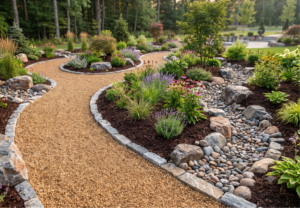
| Pea Gravel | Decorative drainage, path surfaces | Garden paths, patios, planting beds | Good — moderate drainage |
| Crushed Rock | Heavy-duty drainage, base compaction | Driveways, high-traffic surfaces | Excellent — structural |
| River Rock | Surface erosion control, swales | Ditches, decorative drainage channels | Good — surface only |
| Recycled Aggregate | Sub-base drainage, fill applications | Under pavers, driveway base, utility trenches | Moderate — eco-conscious option |
The Role of Sand in Drainage and Filtration
Gravel moves water. Sand filters it. Together, they form the two halves of a drainage system that performs under real-world conditions — not just ideal ones. Sand’s finer particle structure catches sediment before it migrates into the drain rock and clogs the voids that make drainage possible in the first place. It also keeps root zones healthy in planting beds and helps water actually soak into the native soil beneath.
Randles Sand & Gravel offers washed sand, mound sand, and purpose-blended French drain gravel and sand mixes for homeowners who want the right combination without the guesswork. Our team can point you toward the right ratio for your specific site — soil type, slope, and how much rain you get all play into which blend actually holds up.
Gravel, Sand, or Both? Choosing the Right Mix
The honest answer is that most residential drainage problems require both, but the ratio and layering depend on how your specific yard actually handles water. A flat lot with clay soil behaves completely differently from a sloped property with sandy loam. Matching the sand and gravel mix to site conditions determines whether the system performs or fails during the first wet season.
Drainage Scenarios vs. Recommended Material & Why It Works
| Yard Condition / Problem | Recommended Material | Why This Works | Expected Outcome |
| Sloped yard with active erosion | Best gravel for yard drainage + sand top layer | Gravel intercepts runoff velocity; sand layer stabilizes surface soil | 50%+ reduction in soil loss |
| Standing water near the foundation | Foundation drainage gravel (drain rock) | Large voids move high water volumes away from the structure rapidly | Reduces basement risk by up to 70% |
| French drain installation | French drain gravel and sand combination | Drain rock carries the water; sand filters sediment before it clogs the system | Long-term system performance |
| Garden beds & planting areas | Sand and gravel mix blended into soil | Opens compacted clay soil, improves aeration and water infiltration at the root level | Reduces plant loss by up to 40% |
| Driveways & high-traffic zones | Coarse crushed gravel base | Structural support under load prevents rutting; surface water drains through naturally | Durable — decades of service life |
| Patios & pathway surfaces | Pea gravel or compacted gravel base with sand bedding | Sand bedding levels the surface; gravel provides drainage and stability underfoot | Even surface, no pooling |
Practical Ways to Use Gravel and Sand for Drainage
1. French Drains:
A perforated pipe bedded in foundationdrainage gravel, wrapped in filter fabric, and covered with drain rock. This is the most effective solution for persistent foundation water issues.
2. Swales and Ditches:
Shallow, graded channels lined with yarddrainage gravel redirect surface runoff away from structures without requiring the installation of pipes.
3. Patios & Pathways:
A compacted gravel base beneath any paved or loose surface prevents heaving in winter and keeps water draining rather than pooling underfoot.
4. Raised Beds & Planters:
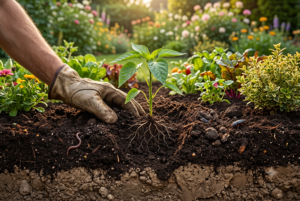
Mixing sand into clay-heavy native soil breaks up compaction and gives roots the drainage they need to stay healthy through a wet winter.
Project Tip: For larger installations, bulk sand and gravel delivery from Randles eliminates the limitation of working in small loads — particularly important when installing French drains or regrading drainage paths that require continuous coverage.
Common Mistakes Homeowners Make with Drainage Materials
1. Using only one material:
Sand alone compacts under load. Gravel alone won’t filter fine sediment. Effective systems use both in the right sequence.
2. Ignoring grade and slope:
Water follows gravity, not assumptions. Without planned grading, even the right materials can direct water in the wrong direction.
3. Underestimating quantity:
Thin coverage leaves gaps through which water can seep. Coverage needs to be deep enough to function — not just to appear in place.
4. Skipping professional input:
Material selection tied to your specific soil type and site conditions matters enormously. A conversation with Randles before purchasing saves both money and frustration.
How Randles Sand & Gravel Helps You Solve Drainage Challenges
Finding drainage rock near me is straightforward. Finding a supplier who can advise on what you actually need — and deliver it in quantity across Gig Harbor, Steilacoom, Tacoma, Bonney Lake, WA, and every surrounding community — is a different matter. Randles has been doing exactly that for nearly four decades.
1. Full material inventory:
Drain rock, pea gravel, crushed rock, washed sand, mound sand, and blended French drain gravel and sand— everything needed for any residential drainage project.
2. Bulk delivery across South Puget Sound:
Bulk sand and gravel delivery to Graham,Lakewood, Port Orchard, and the full service area means your project isn’t limited by what you can haul in a pickup bed.
3. Practical material guidance:
We work with homeowners and landscapers to find the right mix for the actual problem — not just whatever happens to be closest.
4. Sustainable options:
Recycled aggregate and on-site landscape waste acceptance for homeowners who want effective solutions with a reduced environmental footprint.
Quick Checklist for Effective Yard Drainage
- Identify where water pools or erodes during and after heavy rain.
- Match your material choice to your soil type and the specific drainage problem.
- Make sure the slope and grading actually send water where it needs to go.
- Order in sufficient quantity —bulk sand and gravel delivery simplifies larger installations.
- Consult Randles Sand & Gravel before purchasing to confirm you have the right mix for your site.
The Final Takeaway: Protect Your Home, Enhance Your Yard
Good drainage is one of those things you don’t notice until it fails — and when it does fail, the consequences show up everywhere at once. The right landscape drainage solutions address the problem before it compounds, and they do it with materials that last.
Whether you need yard drainage gravel to manage slope runoff, French drain gravel and sand to protect your foundation, or a blended sand-and-gravel mix to reclaim waterlogged garden beds, getting the materials right the first time is what makes the difference.
Protect Your Home and Yard: Start with the Right Materials
Contact Randles Sand & Gravel for guidance on material selection and delivery across Graham, Lakewood, Port Orchard, Gig Harbor, Steilacoom, Tacoma, and Bonney Lake, WA.
Decades of experience, the right inventory, and delivery that gets your project moving.
Contact Randles Sand & Gravel at (253) 531-6800 to schedule an appointment with our team today.