An Introduction
Most yards don’t fail overnight; they fail one wrong material decision at a time. If the gravel base is laid too shallow, it will begin to settle in a season. Mulch right up against a foundation does not protect the bed; it invites rot and pests. Stone set without proper compaction shifts the first time the ground freezes and thaws. None of these mistakes look serious at first, which is exactly why they’re left alone until the yard is pooling water, growing weeds through every gap, or costing far more to fix than it would have to install correctly. Randles Sand and Gravel has been supplying the materials behind landscapes that actually hold up, not just the ones that photograph well on day one.
In this blog, we’ll go beyond just looking at gravel, mulch, and stone side-by-side and explain how these landscaping materials actually function in the ground. We’ll discuss how materials are selected for specific applications, how design choices impact long-term performance, and what actually makes a yard low-effort, year after year.
Choosing the Right Gravel, Mulch, and Stone
The single biggest mistake homeowners make with landscape gravel is choosing by appearance instead of function, and it’s the reason so many gravel beds end up needing to be redone.
Why Fines Content Changes Everything
Crushed rock products like ⅝-minus contain a mix of stone sizes down to fine dust, and it’s that dust, not the larger stone, that locks the material together when compacted. Strip that fines content away, as happens with a clean, washed gravel, and the material stays loose no matter how much it’s tamped down. That’s precisely why ¾ clean rock and drain rock are used for French drains and foundation perimeters, where water needs to flow freely, and a fines-heavy product is used for driveways and paths that need to bear weight without shifting underfoot.
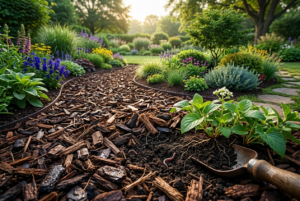
Bark mulch works on a completely different mechanism. Two inches of cover doesn’t do much for weed suppression, as enough light still gets to the soil to germinate seeds. Three to four inches of consistent light-blocking material that still allows air and water to reach the roots beneath. Piling it any deeper actually starves roots of oxygen and can suffocate the plants it is supposed to protect.
Designing Functional and Beautiful Outdoor Spaces
Outdoor spaces that hold up are designed from the ground up, not decorated after the fact. Hardscape materials should be selected based on the load a space will carry, foot traffic, furniture, or vehicles, before a single decorative choice gets made, because a base that isn’t rated for its actual use will fail regardless of how the surface looks.
A patio that looks finished in June can be sinking by September if the base beneath it was never properly compacted.
The most reliable approach compacts gravel in shallow layers, or lifts, no more than four inches deep at a time. The bottom layer of a full base is left loose by one-pass compaction, and that is where settlement begins. This layered approach is an added benefit for homeowners in Gig Harbor and Tacoma where properties often have sloped sections. Heavier stone is natural to hold at grade changes, lighter material is natural to keep on level ground, and it’s double duty for erosion control.
Creating Low-Maintenance Landscape Features
A low-maintenance yard isn’t about having fewer features; it’s about picking materials that don’t need constant intervention to keep working. Skip that step, and the maintenance just moves from planned to ongoing: mulch that thins out brings weeds back in weeks, and gravel paths laid without a compacted base need to be regraded every year instead of every few years.
Outdoor hardscaping reduces upkeep in a way that’s easy to overlook: every square foot converted to gravel or stone is a square foot that no longer needs mowing, edging, or watering. For ongoing effort, a few choices matter most:
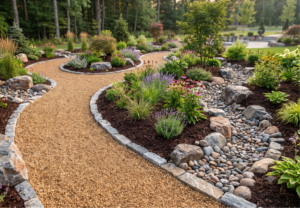
- Gravel borders installed with buried edging, which stop grass roots from creeping into beds far more effectively than an unedged border.
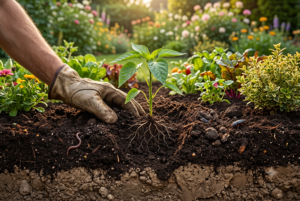
- Compost-amended soil worked into the top six inches before planting, improving water retention enough to reduce watering frequency through summer.
- Quarry spalls set below grade and interlocked rather than stacked, which lets them resist frost heave instead of tipping forward over time.
Properties in Steilacoom and Port Orchard with older, established landscaping often see the fastest visible improvement by replacing the highest-maintenance turf sections first, rather than reworking the whole yard at once.
Balancing Color, Texture, and Drainage
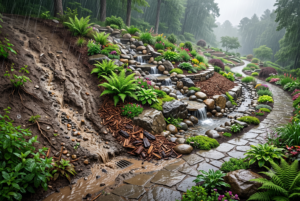
A landscape that seems to look spectacular but neglects drainage rarely makes it through its first wet season intact, and correcting a saturated bed almost always costs more than doing the drainage up front.
Every visible layer has a functional layer behind it. Mason sand and pipe bedding are not decorative. Often, they are the layer that directs water away from foundations before it even reaches the surface material a homeowner actually sees. Water is going to find the lowest point anyway, usually against a foundation or under a patio slab where it’s much harder to fix later, so skip that base to save a step.
| Priority | Visible Layer | Functional Layer Beneath |
| Color and texture | Bark, pea gravel, landscape rock | Crushed rock or washed sand base |
| Structural load | Decorative surface stone | Compacted CSTC or CSBC |
| Water movement | Any top layer | Graded sand or drain rock |
For Lakewood and Bonney Lake WA properties on clay-heavy soil, this base layer isn’t optional; clay drains too slowly on its own, and without a gravel base doing that work, standing water becomes a recurring problem regardless of what’s planted above it.
Maintaining a Durable and Attractive Landscape
Material choice determines how much maintenance a landscape needs, but even the right materials need periodic attention. Gravel paths generally require a light top-up every one to two years as the surface material naturally moves away. Bark mulch breaks down faster and needs to be replaced every year to be effective at suppressing weeds.
Stone features are the most durable of the three, but frost heave is the one condition that catches most homeowners off guard. A spring check before the growing season speeds up weed pressure, catching small shifts before they become larger repairs, because improperly set stone will rise up over a single winter from repeated freeze and thaw. This is especially relevant for Graham properties, where seasonal freeze-thaw cycles are consistent enough to affect gravel bases and stone borders year after year if they’re never inspected.
Getting the Combination Right for the Long Term
Gravel, mulch, and stone only work together when each of them is doing the job they are actually suited for. Structural support where weight matters, ground cover where soil and weed protection matters, and stone where long-term durability matters. Get the pairing wrong, and the longer you leave the fixes, the more costly they become.
Randles Sand and Gravel has supplied these materials to homeowners and contractors across the region since 1987, with three locations: Puyallup, Gig Harbor, and Eatonville, stocking everything from washed gravel and crushed rock to bark, compost, and sand. Our team helps figure out the right combination before material ever leaves the yard, and our delivery fleet gets it to the site on schedule.
If a yard is already showing early signs of the wrong material choices, settling gravel, thinning mulch, or shifting stone, addressing it now costs far less than waiting for the next wet season to make the damage worse. Call us to talk through what the project needs: (253) 531-6800