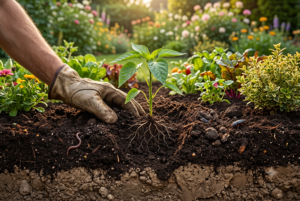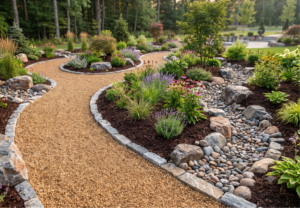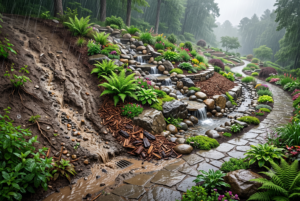
Garden soil left exposed faces relentless challenges—moisture evaporates rapidly during dry spells, weeds establish themselves overnight, and temperature fluctuations stress plant roots. Your water consumption increases while soil quality steadily declines. If you don’t mulch your garden properly, you will be watching your gardening investment deteriorate season after season. The cycle becomes exhausting: more watering, constant weeding, additional fertilizing, and still your plants struggle. Bare soil compacts over time, reducing oxygen availability and creating drainage problems. The damage to the environment also adds up: too much water use, reliance on chemicals, and soil that is too weak and needs synthetic amendments. These fundamental issues undermine everything you’re working to achieve in your landscape. At Randles Sand and Gravel, we’ve spent over three decades helping property owners across the region—from bark mulch in Tacoma installations to bark mulch in Puyallup projects—break this frustrating cycle through properly selected, eco-friendly mulching solutions.
This blog discusses eco-friendly mulch options, from traditional bark varieties to new innovations, giving you the knowledge to make informed decisions. We’ll cover what makes mulch truly sustainable, how different options compare, and practical application strategies that deliver real results in your landscape.
What Makes Mulch Eco-Friendly?
Mulch that is good for the environment works with nature, not against it. They decompose naturally, enriching your soil instead of leaving harmful residues that persist for decades.
Real sustainable mulch comes from sources that are well-managed, don’t have any chemicals added to it, and break down over time to feed helpful soil organisms. Unlike synthetic alternatives that can leach unwanted compounds, organic mulches contribute to a healthy soil ecosystem where microorganisms, earthworms, and beneficial fungi thrive.
Bark Mulch: The Classic Eco-Friendly Choice
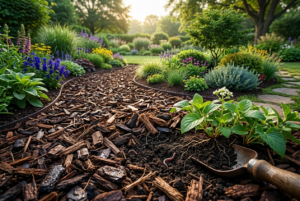
Bark mulch is still one of the most reliable and eco-friendly options used by gardeners in Gig Harbor, and Eatonville. The material for this comes from trees that were cut down responsibly and uses material that would have been wasted during the production of lumber. Bark locks in moisture, reducing the need for frequent watering as you have to do during dry weather. It also acts as a natural insulator, preventing plant roots from getting damaged during harsh temperature changes.
Bark mulch also consists of natural chemicals that prevent weeds from growing without using chemicals. It can be finely shredded to chunky nuggets, and it looks good in any garden style. It takes 2-3 years to improve the soil.
We recommend a 2–4-inch application depth for projects requiring bark mulch coverage in Graham or Port Orchard. At this depth, bark mulch in Steilacoom and Bonney Lake, WA, works best. It provides enough insulation without making it easy for pets to survive.
Beyond Bark: Other Eco-Friendly Mulch Options
Bark mulch is still one of the most popular products, but sometimes the situation needs other alternatives.
- Cedar plate chips keep insects away because they have aromatic oils in them. These chips are great for keeping unwanted visitors away without using chemicals.
Because cedar is so strong, it lasts four to five years before it needs to be replaced. We recommend cedar chips for play areas, pathways, and around building foundations.
- Compost functions as both a soil amendment and mulch. While it breaks down within one season, it provides immediate nutritional benefits. Many customers use compost in vegetable gardens for aggressive soil building, then top it with bark for longer-lasting weed suppression.
- Wood chips offer extended longevity at three to four years with superior moisture retention. Straw works excellently for vegetable gardens, though it’s short-lived. Each option has its place, though bark products and cedar chips offer the best balance of performance, longevity, and appearance.
Comparing Eco-Friendly Mulches
| Mulch Type | Lifespan | Moisture Retention | Weed Suppression | Primary Benefits |
| Bark Mulch | 2-3 years | High | Good | Attractive, soil improvement, available |
| Cedar Chips | 4-5 years | High | Excellent | Pest resistance, aroma, and durability |
| Compost | 6-12 months | Moderate | Fair | Immediate nutrition, rapid enrichment |
| Wood Chips | 3-4 years | Very High | Good | Extended longevity, moisture retention |
Our experienced staff at all three locations discuss these options based on your garden type, maintenance preferences, budget, and aesthetic goals.
How to Choose the Right Mulch for Your Garden
- Garden Type: Ornamental beds perform best with standard landscape bark for a polished appearance and excellent moisture retention. Vegetable gardens benefit from compost since you can incorporate it into the soil at season’s end. Play areas need cedar chips for their soft, safe surface.
- Climate Considerations: Moisture retention ranks as a top priority during dry summers. Our bark products excel here, but particularly exposed areas might need thicker bark nuggets that decompose more slowly.
- Maintenance Preferences: Cedar chips offer four to five years of service. Standard bark mulch provides two to three years—the sweet spot for most property owners. Compost requires annual refresh but offers continuous soil quality improvement.
- Budget Planning: Think in terms of annual service life. Cedar costs a little more at the start but lasts almost twice as long as standard bark, making it economical over time.
Tips for Applying and Maintaining Mulch
Preparation Steps:
- Clear the area of existing weeds and debris before applying mulch
- Water soil thoroughly—mulch works best when applied to already-moist soil
- If weeds keep coming back, try laying newspaper under your mulch to give additional suppression
Application Guidelines:
- For best results, use two to four inches of bark mulch
- Less than two inches won’t adequately suppress weeds
- Moist conditions are created if you keep more than four inches of water
- To keep the mulch from rotting, keep it two to three inches away from tree trunks and shrubs
Maintenance Tips:
- Top-dress beds with one to two inches of fresh mulch annually
- Simply add a fresh layer on top—complete removal isn’t necessary
- Decomposing lower layers continue to enrich the soil, while fresh material maintains its appearance
- Apply mulch in late spring when the soil is warm or in fall for winter insulation
Our delivery services cover the entire region, ensuring proper delivery to your project site.
When to Refresh or Replace Your Mulch
When mulch has faded from rich brown to weathered gray, it’s losing effectiveness. If you easily see soil through the mulch layer, or the depth has compressed below two inches, top-dressing is needed.
If the weeds are pushing through, it means that the layer has become too thin to work. Adding new material brings back weed control without taking away the old mulch.
Every 2 to 3 years, Standard Bark Mulch needs a lot of work, and every year it needs a little work involving top dressing. Cedar products can go four to five years before major replacement. Compost mulches need complete replacement for each growing season.
Most situations call for simple top-dressing rather than complete removal. Decomposing lower layers actively improves soil. Complete replacement is only necessary for disease issues or a complete landscaping redesign.
Building Healthier Gardens Through Smart Mulching Choices
To have a thriving garden, you need to work with your environment and choose an appropriate eco-friendly mulch, as it represents one of the smartest landscaping investments. Whether you select classic bark mulch Tacoma properties trust, durable cedar play chips, or nutrient-rich compost, you’re making a choice that benefits your plants, improves your soil, and supports environmental responsibility. Proper mulching conserves water, suppresses weeds naturally, builds soil health continuously, and maintains an attractive appearance across seasons—exactly what bark mulch Puyallup landscapes and properties throughout the region need for sustainable landscaping success.
Since 1987, Randles Sand and Gravel have been helping property owners and contractors make landscapes look better. We have three convenient locations where we serve, i.e., Puyallup, Gig Harbor, and Eatonville. We also deliver to many communities, including bark mulch in Gig Harbor, Eatonville, Graham, Port Orchard, Steilacoom, andBonney Lake, WA. This makes it easy for anyone to get high-quality, eco-friendly mulch for any size project in these areas. We don’t just sell products; we also work with you to make landscapes that look great and last for a long time.
Ready to transform your landscape with eco-friendly mulch? Contact Randles Sand & Gravel at (253) 531-6800 to speak with our experienced team. We’ll help calculate your material needs and schedule convenient delivery. Visit us at any of our three locations or reach out through our website for the products, expertise, and service to support your success.