An Introduction
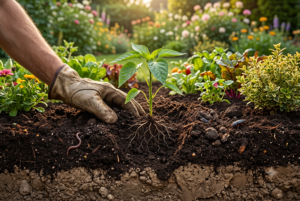
The most dangerous part of a backyard is not the fence, pool, or shed tools, as no landscaping catalog will tell you. Backyards do not include the fence, the pool, or the garden tools left in the shed. It is the ground between point A and point B; the path no one planned and the surface no one thought twice about. Worn-down dirt compacts, cracks, and turns slick the moment it rains, making the case for non-slip materials for outdoor walkways more urgent than most homeowners realize. If you put the wrong loose material under a climbing frame, it won’t protect you from falling. The argument over whether to use play sand vs pea gravel for play area surfaces is not just a matter of personal preference; it is a matter of safety with real consequences. Choosing the wrong walkway and play area materials does not just affect how a yard looks; it affects what happens when someone slips, falls, or when erosion quietly takes the surrounding soil with it, season after season. Most homeowners don’t realize any of this until they are already dealing with the consequences. We at Randles Sand & Gravel provide the best materials for garden paths, safe landscape materials for play areas, and everything else in between. We help homeowners who want to get it right, not just get it done.
This blog covers everything you need to make a confident decision, from the best material for garden paths to safe landscape materials for play areas, comparing real options, clarifying common myths, and giving you the information to act.
What to Look For in Walkway Materials
Before ordering anything, four questions should guide every material decision:
- Will it drain? Materials that hold water or sit over compacted clay without a proper base become slip hazards fast in wet climates.
- Will it stay stable under foot traffic? Rounded gravel can roll underfoot. Bark breaks down. Pavers shift without a compacted sub-base.
- Is it safe for children? Surface depth, particle size, and impact cushioning all change when kids are involved.
- How often will it need maintenance? Bark needs replenishing every one to two years. Crushed rock and pavers last significantly longer with minimal upkeep.
Getting these right up front saves a significant amount of rework down the road.
1. Gravel and Crushed Rock Paths
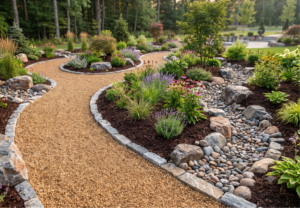
Gravel is the best type of landscape rock for garden paths, and it works well in wet areas all the time. Water doesn’t pool; it drains straight through, which is exactly what yards in the Pacific Northwest need.
The differences between gravel types matter more than most people realize:
| Material | Best Application | Key Trait |
| Pea Gravel | Play areas, decorative paths | Smooth, rounded; good drainage |
| ¾ Clean Crushed Rock | Primary walkways | Firm, stable, load-bearing |
| CSTC (⅝ Minus) | Sub-base for any hard path | Compacts into a solid foundation |
| Landscape Rock | Borders, accent paths | Long-lasting, low-maintenance |
In the bark mulch vs gravel walkway debate, gravel wins on durability every time on high-use routes. Bark is natural; it breaks down, gets compressed by foot traffic, and needs to be replaced every season. Gravel that is put down correctly will stay in place for years without needing to be touched.
A path that looks finished but drains poorly is just a slow-motion liability. The surface you choose today determines what you’re dealing with every rainy season for the next decade.
2. Bark Mulch and Wood Chip Walkways
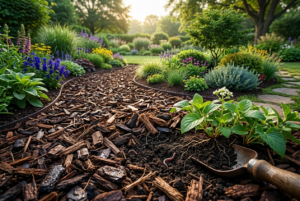
Bark and wood chips are useful in the landscape, but homeowners don’t always use them in the right places. Landscape Bark and Cedar Play Chips look natural, keep weeds at bay, and are easy to put down on garden paths that don’t get a lot of foot traffic.
Where bark genuinely earns its place is under play equipment. As per U.S. Consumer Product Safety Commission guidelines, wood chips maintained at a nine-inch depth can protect against falls from up to ten feet, compared to pea gravel at the same depth, which protects up to five feet. If your children play on taller structures, that distinction matters considerably. For kid-friendly backyard path ideas that double as play zones, cedar play chips are worth serious consideration.
3. Pavers, Steppingstones, and Hard Surfaces
Pavers are the most durable option for walkways in the long run. If you put down a paver path on a base of compacted crushed rock, it can last for 25 to 40 years with little to no maintenance.
Many homeowners don’t realize that the surface material is only half of the job. Even good pavers will shift and form uneven sections in just a few seasons if the sub-base isn’t properly prepared. For non-slip materials for outdoor walkways, textured pavers and flagstone are among the most reliable choices. Their naturally rough surfaces keep traction when wet, which is very important when it rains, and leaves get wet from October to spring.
There shouldn’t be hard surfaces under play equipment. If your design has both a walkway and a play area, the change from a hard surface to a loose-fill material like pea gravel or cedar chips should be planned out and easy to see.
4. Matching Materials to Your Climate and Yard
The weather in the Pacific Northwest is the most important thing that most homeowners don’t think about enough. Here are a few important things to know:
- On play sand vs pea gravel for play area: Sand compacts over time, loses impact absorption, retains moisture, and in wet climates can become waterlogged and attract animals. Pea gravel for playgroundsdrains right away and keeps its cushioning longer, which makes it a better choice for the area’s rain patterns.
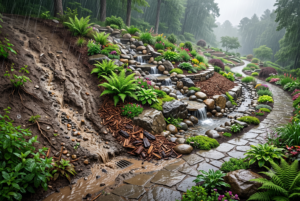
- On sloped yards: Compacted crushed rock with proper edging resists erosion better than bark or loose gravel, both of which migrate downhill under heavy rain.
- In shaded areas: Bark accumulates moss and mildew quickly through wet winters. Gravel stays cleaner and requires less seasonal maintenance.
Design Tips for Beautiful, User-Friendly Paths
Function should be the most important thing in every design choice. Here are some rules that work no matter what the material is:
- Width matters. A comfortable primary walkway should be at least 36 inches wide, enough for two people or a wheelbarrow without feeling cramped.
- Edge everything. Whether you’re using pea gravel, bark, or crushed rock, edging keeps material in place and gives the path a finished appearance.
- Layer the base correctly. Start with compacted CSTC for any path that will see regular use. This prevents sinking and extends the surface life considerably.
- Plan the path logic around how your family actually moves — from the back door to the play area, from the gate to the patio. Paths that follow natural movement patterns get used; those that don’t get bypassed.
Using different materials together works well. For example, using pavers or stepping stones for the main walkway and then switching to pea gravel or cedar chips at the play zone makes the outdoor space both useful and visually appealing.
Your Path, Done Right: A Final Word
The decisions covered in this blog, why crushed angular rock works better than pea gravel on main walkways, why wood chips cushion falls better than sand in wet areas, why the sub-base is non-negotiable, and why the wrong surface under a play structure is a safety risk that most homeowners don’t notice until after an accident, are what make a yard last.
Randles Sand & Gravel is among the largest producers of sand, gravel, and topsoil in the Puget Sound area, supplying walkway and play area materials to homeowners and contractors across Tacoma, Graham, Lakewood, Port Orchard, Gig Harbor, Steilacoom, and Bonney Lake, WA. From pea gravel for playgrounds and Cedar Play Chips to landscape rock for garden paths and crushed rock sub-base products, we carry everything your project actually needs, and our team will help you calculate quantities and select the right grade for your specific application.
If your paths aren’t where they need to be, in safety, drainage, or appearance, now is the time to fix them. Call us at (253) 531-6800 or visit us at 5802 192nd St E, Puyallup, WA 98375. The longer an unfinished path sits, the more it costs to correct.