Building a yard that actually works means more than planting flowers and trimming hedges. It means designing space that handles whatever weather shows up—and doesn’t turn into a muddy disaster every time it rains.
If you’re in Tacoma, Graham, or Bonney Lake, WA, you already know the drill. Torrential downpours one week. Bone dry the next. Without proper planning, water either floods your beds or rushes straight into the street, taking half your topsoil with it.
That’s where climate-smart landscaping saves the day. And honestly? Two of the best tools are simpler than you’d think: bark mulch and drainage rock.
An Introduction: What Is Climate-Smart Landscaping?
Climate-smart landscaping means designing yards that work with the weather rather than being destroyed by it.
The goals are simple:
- Keep water from running off during storms
- Stop soil from washing away
- Help plants handle droughts and downpours
- Protect your foundation from water damage
According to EPA data, stormwater runoff flows over streets and rooftops without soaking in, picking up pollutants and causing erosion. In residential yards, managing this runoff protects both your property and the environment.
Two materials handle stormwater management better than most people realize: bark mulch and drainage rock. Both are affordable, effective, and easier to work with than complicated drainage systems.
Why Stormwater Management Matters in Residential Yards
Quick question: Why worry about stormwater?
Because unmanaged rainwater wreaks havoc:
- Strips topsoil from planting areas
- Pools around foundations—hello, basement leaks
- Floods patios and gardens
- Creates mud pits that take days to dry
- Costs money to fix, year after year
Ever stood outside after a cloudburst, watching the water pool near your house? Yeah, it’s frustrating.
| What Goes Wrong | The Damage It Causes |
| Water collects near the foundation | Cracks, moisture intrusion, basement flooding |
| Runoff washes soil away | Uneven lawns, exposed roots, weakened plants |
| Garden beds stay flooded | Plant loss due to root rot |
| No drainage plan in place | Problems grow worse with every storm |
Smart landscaping doesn’t stop rain. It controls where water goes and how fast it gets there.
What Affects the Cost of Fixing Stormwater Issues?
While every property is different, the effort involved often depends on:
- Yard slope and soil type
- How close does water flow toward the foundation
- Existing drainage (or lack of it)
- The size of the affected area
- How long has the problem been ignored
Smart landscaping doesn’t stop rain—but it does control where water goes and how quickly it moves. That control can make all the difference over time.
The Role of Mulch in Climate-Smart Landscapes
Bark mulch looks basic. But for stormwater management, it punches way above its weight.
What Is Mulch?
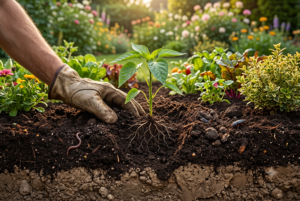
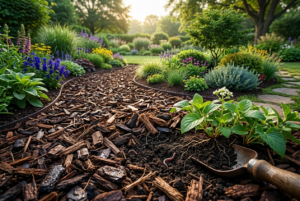
Mulch is organic material—shredded bark, wood chips—spread over garden beds. It’s functional, not just pretty.
How it manages water:
- Cushions rain impact so soil doesn’t splash away
- Let the water soak in slowly instead of running off
- Keeps moisture in soil during dry spells
- Stops soil from compacting during storms
Rain hitting bare soil? It dislodges particles and washes nutrients downhill. Rain hitting mulch? It soaks in gently, and the soil stays put.
This matters in places like Lakewood and Port Orchard, where rainfall intensity can swing wildly. Mulch creates a buffer between your plants’ roots and extreme weather.
Bonus benefits:
- Blocks weeds—less work for you
- Keeps soil temperature stable
- Breaks down slowly and feeds the soil over time
For low-maintenance landscaping, mulch delivers serious value from one material.
How Drainage Rock and Gravel Control Water
Drainage rock doesn’t hold moisture like mulch. Its job? Moving water away from trouble spots—fast.
What Is Drainage Rock?
Drainage rock is washed stone-sized, so water flows through gaps easily. Place it around slopes, foundations, or low spots, and it:
- Channels water to safe drainage areas
- Anchors soil in place for erosion control
- Gets rid of puddles and mud
- Creates paths for water to move through
Think of it as plumbing for your yard. Water flows through gaps in the stone rather than sitting on top.
How It Helps with Stormwater
Drainage rock solves specific problems:
- Foundation drainage – Along house edges, it moves water away from basements
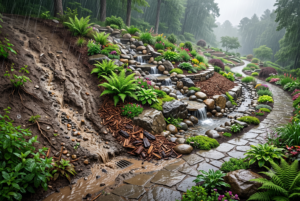
- Slope control – On hills, it slows water speed and prevents washouts
- Patio protection – Around hardscaping, it stops water buildup and mud
For homes in Gig Harbor and Steilacoom where yards slope toward the house, drainage rock provides foundation drainage that prevents expensive water damage.
EPA research shows impervious surfaces increase runoff and alter natural water flow, leading to bigger peak flows. Landscape rock placed strategically redirects this runoff before it causes problems.
Designing Simple Stormwater Features with Mulch and Rock
You don’t need complicated setups. Simple designs work great.
Rain Garden Ideas
A rain garden is a shallow dip planted with water-loving species. It catches runoff and lets it soak in naturally.
What you need:
- Native plants at different heights
- Well-draining soil
- Bark mulch layer to hold moisture
- Drainage rock border to direct flow
Where to put it: Under downspouts or where water naturally collects.
The EPA’s National Stormwater Calculator notes rain gardens are shallow depressions with engineered soil that store and infiltrate runoff. They’re one of the best rain garden ideas for residential properties.
| Garden Size | Runoff It Handles | Upkeep |
| 100 sq ft | 300–500 sq ft of roof | Low — seasonal weeding |
| 200 sq ft | 600–1,000 sq ft of impervious area | Low — occasional mulch |
| 300+ sq ft | Major yard drainage | Medium — plant trimming |
Rock Borders for Yard Drainage Solutions
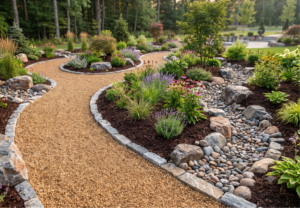
Build rock borders along paths or drainage routes:
- Larger landscape rock on edges for definition
- Medium drainage rock in the center for flow
- Angle the channel toward lawn edges or gardens
This slows water down and stops erosion—one of the simplest yard drainage solutions for sloped yards.
Mulch Circles Around Trees
Young trees love mulch rings:
- Keeps roots cool in summer
- Soaks up rain gradually
- Reduces soil compaction
How to apply: Spread bark mulch 2-3 inches thick around the base, but don’t let it touch the trunk. Simple protection that works.
Choosing the Right Materials and Installing Them Correctly
Knowing what to use matters. Using it right matters more.
| Material | Where to Use It | Water Benefit |
| Bark mulch | Garden beds, around plants | Holds moisture, helps control erosion |
| Drainage rock | Foundation edges, low spots | Moves water, prevents pooling |
| Landscape rock | Borders, dry creek beds | Guides water flow while adding visual appeal |
| Topsoil | Planting areas, grading | Supports plants and improves drainage |
Installation Tips
- Slope away from your house – Grade yards so water flows away from foundations
- Put rock where water already flows – Work with natural drainage patterns
- Cover bare soil – Use bark mulch on any exposed areas
- Blend materials naturally – Avoid harsh transitions between rock and mulch
For properties across Tacoma, Graham, Lakewood, Port Orchard, Gig Harbor, Steilacoom, and Bonney Lake, WA, using materials designed for Pacific Northwest rain patterns makes the difference between systems that work and systems that fail within a year.
Final Takeaway: A Smarter, Greener Outdoor Space
The best landscapes don’t fight water—they manage it. Using bark mulch and drainage rock in the right spots creates yard drainage solutionsthat protect your property, cut down on maintenance, and keep things healthy no matter what the weather throws at you.
Here’s what works:
- Slow it down – Mulch takes the punch out of heavy rain
- Send it where you need it – Rock gives water a clear path
- Stick with natural stuff – Both are sustainable and won’t break the bank
- Keep it looking decent – No reason drainage has to look terrible
The EPA emphasizes that when we soak up rain and reduce runoff, we help prevent water pollution, reduce flooding, and protect drinking water. Residential stormwater management benefits both your property and the broader community.
Planning landscape improvements in Gig Harbor, Tacoma, Graham, Lakewood, Steilacoom, or Bonney Lake, WA? Quality materials make all the difference. Premium drainage rock, good topsoil, and properly processed bark mulch perform better and last longer than cheap alternatives.
Randles Sand & Gravel offers comprehensive landscape materials—landscape rock, gravel, sand, bark mulch, compost, and topsoil—with delivery throughout the region. Our team helps with material selection and quantities for your specific project, making sure your climate-smart landscaping actually works long-term.
Ready to tackle stormwater management in your yard? Contact us today at 253) 531-6800 for quality materials and expert support that make your outdoor space work.