Here’s what nobody tells you upfront: your garden ground cover choice determines everything. Pick wrong, and you’re stuck spending 15-20 hours monthly pulling weeds, replacing dead plants, and watching your water bill climb while soil washes away with every rainstorm. Half of all residential irrigation water gets wasted through evaporation and runoff, which means you’re literally pouring money down the drain. Worse yet, your weekends disappear into yard work instead of actually enjoying that outdoor space you created.
At Randles Sand and Gravel, we’ve watched thousands of homeowners flip this script completely by making one smart material decision upfront.
What’s happening in landscaping trends 2026 couldn’t be clearer—people are finally walking away from high-maintenance yards. Bark mulch and landscape gravel are leading this shift, creating drought-tolerant yards that look incredible without demanding your entire Saturday.
Why Low-Maintenance, Water-Wise Landscaping Is Booming
American households dump nearly 9 billion gallons daily into landscape irrigation. About half of that water just evaporates or runs off before plants can even use it. When your water bill shows up, those numbers start feeling pretty personal.
Climate patterns aren’t getting any more predictable either. Water-wise landscaping isn’t just about being eco-conscious anymore—it’s about keeping bills manageable and yards alive during dry spells. The landscaping industry hit $188.8 billion last year, growing steadily since 2020. But what’s really interesting is that over 63% of gardeners are expanding their outdoor spaces this year. They’re not signing up for more work, though. They want yards that actually enhance their lifestyle, not hijack every weekend.
Quick math: A typical 4-zone sprinkler system gobbles up 2,160 gallons per watering session. Run that three times weekly, and you’re looking at nearly 26,000 gallons monthly.
Smart garden ground cover choices change everything. The right materials hold moisture naturally, knock out weeds without chemicals, and keep things looking sharp without constant maintenance. Both bark mulch and landscape gravel deliver when you use them right.
Bark Mulch: Benefits, Best Uses, and 2026 Trends
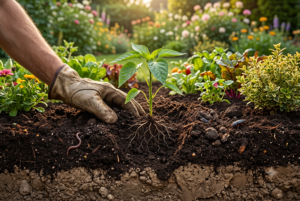
Science backs up what bark mulch does. Research shows it cuts evaporation by up to 70% compared to bare soil. That three-to-four-inch layer creates a barrier that keeps moisture where it belongs—with your plants.
Studies consistently show 25-50% water usage drops, and plenty of homeowners report watering once weekly instead of every other day during summer heat.
Temperature control is another big win. Mulched soil stays up to 8°C cooler than unmulched ground. Wood chips keep temperature swings within 5-9 degrees while bare soil bounces over 21 degrees between day and night.
The soil health angle matters too. Bark mulch breaks down gradually, feeding nutrients back while improving soil structure. Gardens that get mulched consistently for three-plus seasons show 30-40% better water retention—your yard literally becomes more drought-resistant over time. Apply it three to four inches deep, and you’ve blocked sunlight from weed seeds without touching chemicals. That’s eco-friendly landscaping that actually works.
Where Bark Mulch Works Best
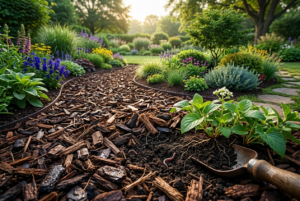
Bark mulch shines in perennial and shrub beds where soil enrichment helps plantings thrive, around established trees for temperature and moisture regulation, garden beds you refresh seasonally since it’s easy to work through, woodland and shade gardens where the natural look fits perfectly, and sloped plantings where coarser types grab hold and fight erosion.
Right now, people want authentic materials. Natural, earth-toned bark is replacing those bright dyed versions. Locally sourced products are gaining traction, too, cutting transportation impacts. Fine to medium-grade shredded bark beats out large nuggets because it packs tighter, suppresses weeds better, and stays put when the wind picks up.
Gravel and Rock: Benefits, Best Uses, and Design Ideas
While bark mulch feeds your garden, landscape gravel builds the bones of your yard. Rock materials last for years with barely any attention, making landscape gravel a solid long-term play for low-maintenance landscaping.
Drainage is where gravel really dominates. Pea gravel’s round shape prevents packing down, pushing excess water away from problem spots. Permeable surfaces let water drain straight through instead of pooling up. Mid-sized crushed stone handles water flow efficiently without compacting too tightly. When people need serious yard drainage solutions, landscape gravel is usually the answer.
| Feeding soil? Plants changing? → Bark Mulch |
| Permanent paths? Heavy traffic? → Gravel |
| Drainage crisis? Foundation areas? → Gravel |
| Moisture retention? Garden beds? → Bark Mulch |
| Fire-prone areas? Zero maintenance? → Gravel |
| Enriching soil? Woodland feel? → Bark Mulch |
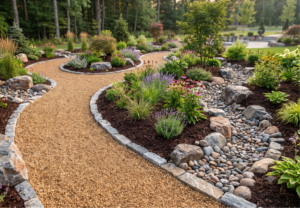
Landscape gravel handles pathways and walkways without breaking down under foot traffic, works around foundations where you don’t want moisture and need fire resistance, tackles drainage applications with various grades for complete yard drainage solutions, complements desert and Mediterranean designs for drought tolerant yards, goes under decks and pool areas where organic stuff would stay soggy, and fits contemporary landscapes with clean modern lines.
Gravel gardening is absolutely exploding right now as one of the hottest landscaping trends for 2026. Using gravel instead of soil or organic mulch locks in water and controls weeds while looking fantastic.
Xeriscaping measures like gravel gardens can potentially slash water bills in half. People are mixing different stone sizes and colors for depth—combining bigger boulders with medium river rock and fine pea gravel. Natural earth tones in gray, tan, and brown still dominate choices.
Bark Mulch vs. Gravel: How to Choose for Your Yard
The mulch vs gravel question really comes down to what each area of your property needs. Go with bark mulch when soil health matters for beds that change over time, you need moisture retention around plantings, natural appearance appeals to you, you’ll swap plants seasonally, or you want to support beneficial soil organisms. Pick landscape gravel when you want permanent setups requiring minimal fuss, drainage is critical, high-traffic zones need durable surfaces, you’re working around structures, long-term low maintenance is the priority, or fire resistance matters in your region.
Your local climate should weigh heavily here. Water-restricted areas benefit hugely from bark mulch’s moisture retention. But drought-tolerant yards full of succulents and adapted species actually prefer the well-drained conditions that landscape gravel creates.
Combining Bark Mulch and Gravel in One Design
Plenty of successful yards mix both materials strategically instead of picking just one. Use bark mulch in planted beds where it enriches soil for flowers and shrubs, then run landscape gravel through pathways, borders, and transition areas. You get organic benefits where they matter and stone durability where you need it.
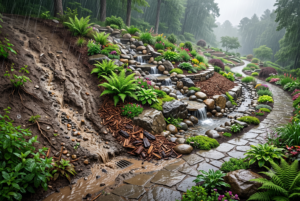
Gravel borders around bark mulch beds work great functionally and aesthetically. Stone edging keeps organic mulch contained so it doesn’t wash into lawn areas while creating clean boundaries. For slopes, use landscape gravel channels for primary yard drainage solutions, while bark mulch goes on planted terraces where it controls erosion and holds moisture.
Color matching matters when you’re mixing materials. Earth-toned gravel in browns and tans pairs naturally with bark mulch without clashing. Toss some groundcovers or ornamental grasses along the edges where materials meet—let them spill over both sides a bit. It makes everything look intentional instead of like you just drew hard lines everywhere.
Your Next Steps to a Smarter Yard
Here’s the bottom line for 2026: pick materials based on what each area actually needs. Bark mulch works best when you care about soil health and want moisture sticking around for your plants. Landscape gravel handles the permanent stuff and drainage issues in drought-tolerant yards. Most successful properties we see aren’t choosing one or the other; they’re using both where each makes sense.
We’ve been supplying homeowners and contractors with premium materials since 1987. Our team knows Pacific Northwest conditions inside and out, so we can help you pick exactly what your project needs. We carry everything—pea gravel, crushed rock, decorative stones, landscape bark, cedar play chips, compost, topsoil, aggregates. Three locations serve Tacoma, Gig Harbor, Port Orchard, Lakewood, Graham, Steilacoom, Bonney Lake, WA, and the surrounding areas. Find us in Puyallup, Purdy, or Lynch Creek Quarry near Eatonville.
Call us at (253) 531-6800 for expert guidance, product details, retail pickup, or delivery straight to your site. Let’s build the yard you’ll actually want to spend time in.